DC-Coupled vs AC-Coupled BESS for PV Parks
Which architecture maximises revenue when retrofitting BESS onto existing solar parks? We analyse both.
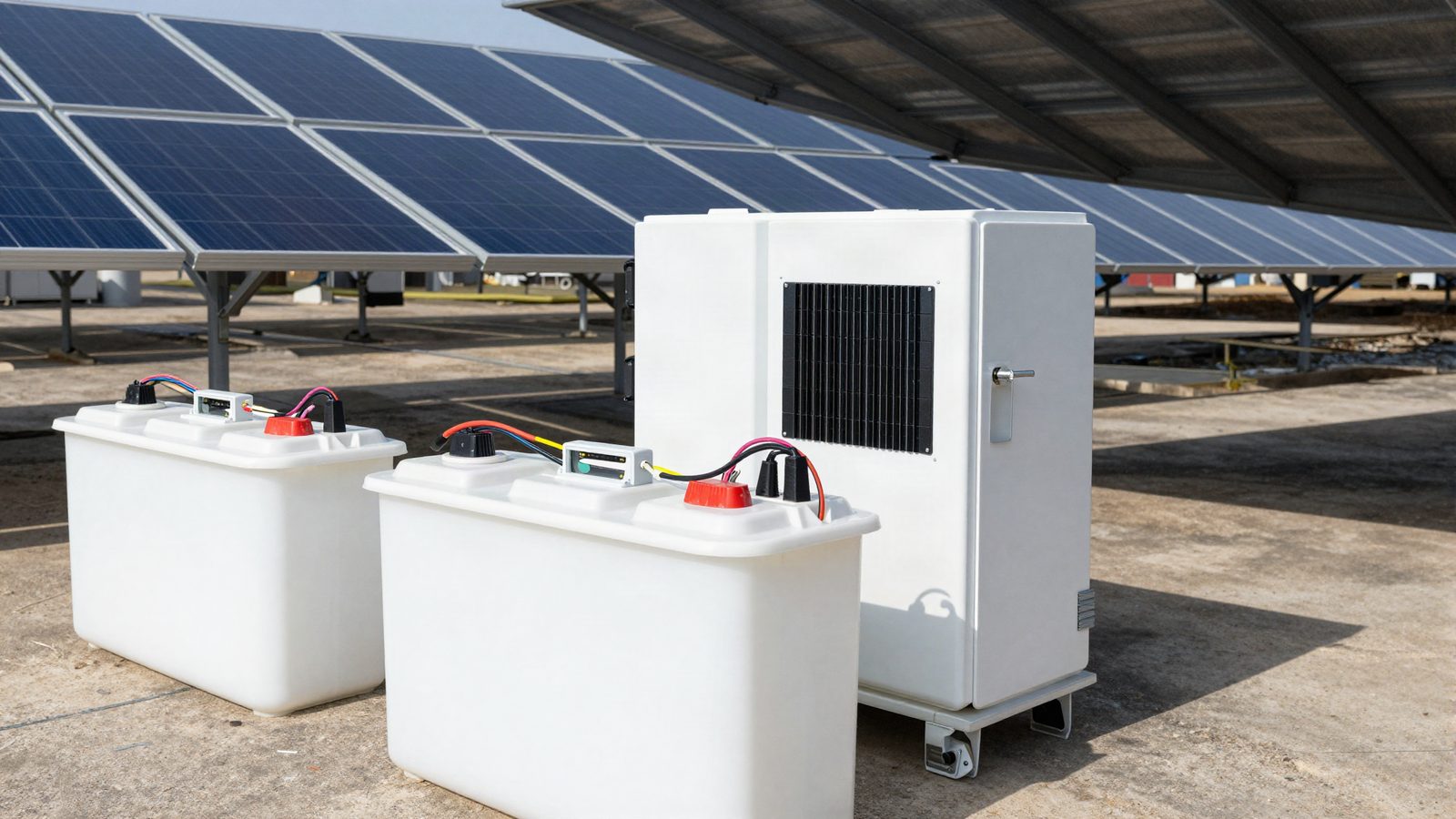
DC-Coupled vs AC-Coupled BESS Which Architecture Maximises Revenue for Existing PV Parks?
Adding battery storage to an operational solar park isn’t just a procurement decision — it’s an architecture decision. Where you connect the battery relative to the inverter determines your efficiency, installation complexity, and ultimately, your return on investment. Here’s how to choose.
The Architecture Decision
When adding BESS to an existing photovoltaic park, you face a fundamental engineering choice: where does the battery connect within the electrical system? The answer defines two distinct architectures — DC-coupling and AC-coupling.
In DC-coupling, the battery connects on the DC side of the solar inverter. The battery and the solar panels share the same inverter and DC bus. In AC-coupling, the battery has its own dedicated inverter (power conversion system) and connects on the AC side, independent of the existing solar infrastructure.
For new-build projects where PV and BESS are designed together from scratch, either architecture can work well. But for retrofits — adding storage to parks that are already generating, already grid-connected, and already earning revenue — the choice has significant practical, financial, and regulatory implications.
Do you modify your existing solar system to integrate a shared DC bus with the battery (DC-coupled), or do you leave the existing system untouched and add the battery as an independent AC-connected unit (AC-coupled)? For our operational PV parks in Cyprus, the answer was clear — but the reasoning is worth understanding.
How DC-Coupling Works
In a DC-coupled configuration, the battery connects directly to the DC bus between the solar panels and the inverter. Energy flows through a single conversion path: solar DC power enters the shared bus, the battery charges and discharges via the same bus, and only one inverter handles the DC-to-AC conversion for grid export.
DC-Coupled Energy Flow
Solar panels → DC bus → shared inverter → AC grid
- Higher efficiency — one DC-AC conversion instead of two
- Captures curtailed energy before the inverter clips it
- Round-trip efficiency: 90–92%
- Fewer components — no separate battery inverter needed
- Requires compatible hybrid inverter or inverter upgrade
- Existing solar inverter may need full replacement
- More complex installation — requires DC system modifications
- Solar system downtime during retrofit
How AC-Coupling Works
In an AC-coupled configuration, the battery system is completely independent of the existing solar installation. The solar panels connect to their existing inverter as before. The battery has its own inverter (PCS — power conversion system) and connects to the AC side of the system, typically at the point of common coupling or the park’s MV switchgear.
AC-Coupled Energy Flow
Two independent systems sharing a grid connection point
- Uses existing inverter as-is — no modifications needed
- Simpler retrofit — minimal disruption to operating solar park
- Independent systems — battery issues don’t affect solar production
- Easier to scale — add more battery containers independently
- Compatible with any existing inverter brand or configuration
- Two conversion stages (DC→AC→DC→AC) reduce efficiency
- Lower round-trip efficiency: 85–88%
- Cannot capture pre-inverter curtailment (clipping losses)
- Requires additional inverter hardware (PCS in container)
Head-to-Head Comparison
The choice between DC and AC coupling involves trade-offs across multiple dimensions. Here’s a detailed comparison of the metrics that matter for existing PV park retrofits in Cyprus.
DC-coupling wins on efficiency (2–4% higher RTE). AC-coupling wins on everything else that matters for a retrofit: cost, complexity, downtime, independence, scalability, and regulatory compliance. For existing operational parks, the non-efficiency factors dominate the decision.
Why We Use AC-Coupling in Cyprus
For the Lighthief portfolio — our multi-park portfolio — AC-coupling is the standard. Here’s why.
Existing Inverter Infrastructure
All parks in our portfolio have operational inverters installed years ago. Replacing them for DC-coupling would mean scrapping functional equipment, incurring unnecessary capital expenditure, and creating weeks of solar production downtime per park. AC-coupling leaves the existing inverter infrastructure completely untouched.
Integrated PCS in Every Container
Each Linyang container includes an integrated power conversion system (PCS), which means the battery inverter is built into the container itself. The system arrives as a complete, self-contained AC-ready unit — connect it to the park’s AC bus and it’s operational. Full-system AC-AC RTE: 86.32%.
Regulatory Compliance
Cyprus Category B grid connection for BESS requires separate metering for storage assets. AC-coupling inherently provides this separation — the battery system has its own connection point with independent metering. DC-coupled systems require additional metering infrastructure to achieve the same regulatory compliance.
Reduced EPC Risk & Timeline
AC-coupling means the BESS installation doesn’t touch the existing solar system. Civil works, container placement, AC cabling, and transformer connection proceed without affecting solar production. The EPC contractor doesn’t need to coordinate with the solar inverter manufacturer or manage DC system modifications.
The Efficiency Gap in Context
The 4–6% efficiency gap represents approximately €6,000–15,000/year in lost revenue for a 5 MW system — far less than the cost of inverter replacement, extended installation time, and production downtime that DC-coupling would require for a retrofit.
When DC-Coupling Makes Sense
AC-coupling is the right answer for retrofits, but DC-coupling has legitimate advantages in specific scenarios. It’s worth understanding when the higher efficiency of DC-coupling justifies the additional complexity.
New Build Projects
When PV and BESS are designed together from the outset, the inverter can be specified as a hybrid unit from day one. No retrofit, no replacement, no downtime. The shared DC bus is designed into the system architecture, maximising efficiency without the complexity penalty.
Undersized Inverters
Parks where the existing inverter is significantly undersized relative to PV capacity experience substantial pre-clipping losses. DC-coupling captures this energy before it’s lost. If the inverter needs replacement anyway (due to age or underperformance), the incremental cost of DC-coupling decreases significantly.
Marginal Economics
Projects where every percentage point of efficiency matters for financial viability may justify DC-coupling’s higher installation cost. If the business case is borderline and the 2–4% efficiency gain tips the IRR above threshold, DC-coupling can be the right choice despite higher complexity.
Even in these scenarios, DC-coupling requires careful inverter specification and integration testing. The hybrid inverter market for utility-scale applications is less mature than the standalone PCS market, and compatibility between different manufacturers’ solar panels and battery modules adds engineering risk. For most projects, the proven reliability of AC-coupled containerised BESS remains the lower-risk path.
What This Means for Your Retrofit
If you own an existing PV park in Cyprus and you’re planning a BESS retrofit, here’s the practical guidance.
Choose AC-Coupling If…
- Your park has existing, operational inverters
- You want to minimise solar production downtime during installation
- You need separate metering for Category B grid compliance
- You want system independence (battery issues don’t affect solar)
- You prefer proven containerised BESS with integrated PCS
- You want the lowest-risk installation path with fastest timeline
Consider DC-Coupling If…
- You’re building a new PV + BESS project from scratch
- Your existing inverter needs replacement anyway (age/failure)
- Pre-clipping losses are significant and quantified
- The project economics are marginal without maximum efficiency
- You have engineering resources for hybrid inverter integration
For the vast majority of existing Cyprus PV parks, AC-coupling is the clear winner. The 2–4% efficiency advantage of DC-coupling does not justify the cost of inverter replacement, the complexity of DC system modifications, the weeks of solar production downtime, or the regulatory challenges of shared metering. Modern containerised BESS units with integrated PCS (like the Linyang containers in our portfolio) are specifically designed for AC-coupled retrofits — plug in, connect, commission.
Plan Your BESS Retrofit
Whether your park is 1 MW or 10 MW, we can assess the optimal coupling architecture for your specific installation. Our engineering team has designed and commissioned AC-coupled BESS across multiple parks — we know what works.
Contact Alexander Papacosta: +357 99 164 158 | office@lighthief.com